
How MMA Scoring Works: The 10-Point Must System and Plan A/B/C
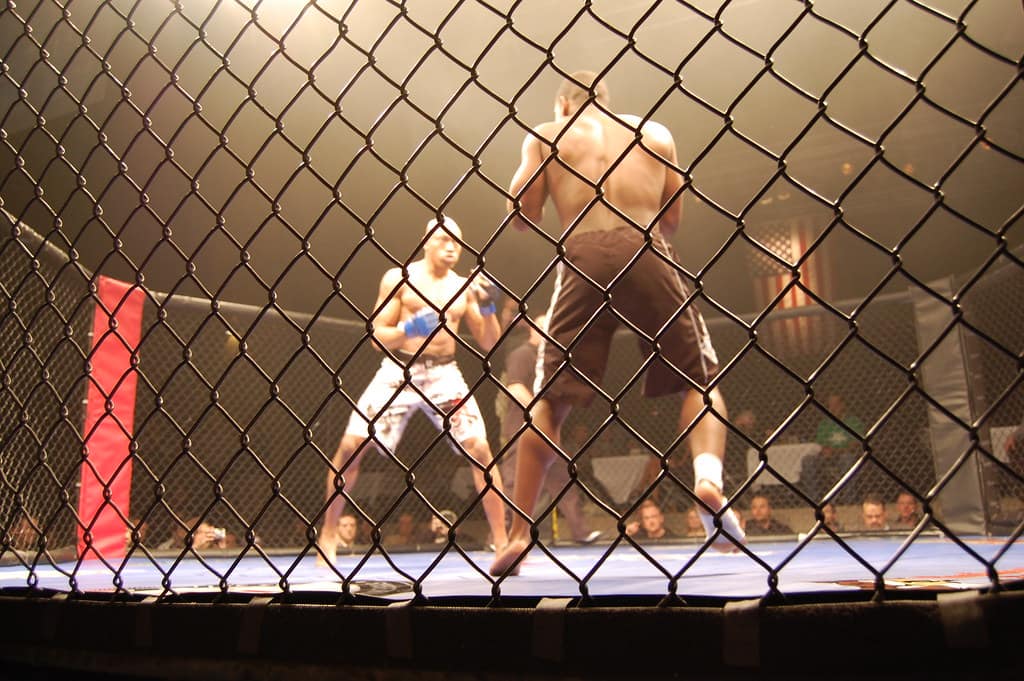
Judging controversies in MMA usually are not caused by vague rules. They are caused by the order of the scoring criteria not being widely known.
The Unified Rules (ABC, amended August 6, 2025) use the 10-point must system, and the criteria are ranked. Effective striking and grappling (Plan A) come first, and aggressiveness (Plan B) and control of the fighting area (Plan C) are not considered at all unless Plan A is judged even. Miss that and half of what looks like a bad decision starts to look like a correct one.
This site is independent and does not send readers to any promotion or streaming service.
The 10-point must system
Every bout is scored by a minimum of three judges. In each round, 10 points must be awarded to the winner and nine or fewer to the loser — except for the rare even round, scored 10-10. The word "must" is doing real work: the winner's score is fixed at 10, and all the judging expresses itself in the loser's number.
Plan A / B / C — the order is not optional
The rules name three things judges evaluate:
- Plan A: effective striking / grappling
- Plan B: effective aggressiveness
- Plan C: control of the fighting area
And then the decisive sentence: Plans B and C are not taken into consideration unless Plan A is weighed as being even. If striking and grappling separated the fighters in a round, then who pushed forward and who held the centre of the cage do not enter the score at all.
Each term is defined:
- Effective striking is judged by the damage and effect of legal strikes landed — not by how many landed.
- Effective grappling is assessed by impactful results from takedowns, submission attempts, advantageous positions and reversals.
- Effective aggressiveness means aggressively attempting to finish the fight, not simply moving forward.
- Fighting area control is about who dictates the pace, place and position of the bout.
What 10-10, 10-9, 10-8 and 10-7 actually mean
| Score | Condition |
|---|---|
| 10-10 | Both fighters competed and there is no difference or advantage between them |
| 10-9 | A win by a close margin — the winner landed the better strikes or used effective grappling |
| 10-8 | A win by a large margin in damage, dominance and duration |
| 10-7 | One fighter is completely dominated in damage, dominance and duration |
Note what is missing: a knockdown is nowhere in the 10-8 criteria. The test is the three D's, not whether someone hit the canvas.
Damage, dominance, duration
- Damage includes visible evidence such as swelling and lacerations, but the rules go further: damage is also assessed when striking or grappling diminishes an opponent's energy, confidence, abilities and spirit. A fighter can take a round on damage without having dominated the action.
- Dominance in striking looks like a losing fighter forced to defend continually, taking no counters when openings appear. In grappling it means taking dominant positions and using them to attempt fight-ending submissions or attacks. The rules state plainly that merely holding a dominant position shall not be a primary factor — what matters is what the fighter does from there.
- Duration is the relative time in a round when one fighter takes and maintains full control of the effective offence while the opponent offers little or none. It is assessed both standing and grounded.
Three things people get wrong
More takedowns does not mean the round. Takedowns are evaluated by the impactful result that comes from them, not by count.
Riding top position does not mean the round. Holding a dominant position is explicitly excluded as a primary factor, and the referee may stand the fighters up or break them whenever neither shows real, significant or sustained effort to advance toward finishing.
Pressure only counts conditionally. Aggressiveness is Plan B, so it only enters the score when Plan A came out even.
Fouls and incomplete rounds
Incomplete rounds are scored. When the referee penalises a contestant, the points are deducted as the scorekeeper calculates the final score for that partial round. Because a single point deduction can undo a run of close rounds, checking for deductions is usually the fastest way to make sense of a scorecard.
If a bout has to be stopped for reasons unrelated to the fighting, it can go to the scorecards once two rounds of a three-round bout, or three rounds of a five-round bout, have been completed.
Related
Decision types (UD, SD, MD) and the KO/TKO distinction are covered in the combat sports glossary, and division limits in MMA weight classes.
Sources
FAQ
- What do MMA judges score first?
- Effective striking and grappling, which the Unified Rules call Plan A. Effective aggressiveness (Plan B) and control of the fighting area (Plan C) are not taken into consideration unless Plan A is weighed as being even.
- When is a round scored 10-8 in MMA?
- When a fighter wins the round by a large margin in damage, dominance and duration of striking or grappling. A knockdown is not part of the criteria, so a round without one can still be 10-8 if those three factors separate the fighters clearly.
- Do takedowns automatically win a round?
- No. The Unified Rules assess grappling by the impactful results of takedowns, submission attempts, positions and reversals, and state that merely holding a dominant position shall not be a primary factor in assessing dominance.
- How are point deductions applied?
- If the referee penalises a fighter, the points are deducted when the scorekeeper calculates the final score for that round. Incomplete rounds are also scored, and a single deduction can reverse the outcome of an otherwise close fight.